In Tokyo, the world’s largest metropolitan area, I found a river of people. It taught me something important about Japanese culture.
A River of People
It is 8:30 in the morning. I leave the Central Gate of Shinagawa Station and walk toward the Konan Exit. A pedestrian bridge about 20 meters wide is completely filled with people. It looks just like a river of people.
One of the World’s Largest Cities
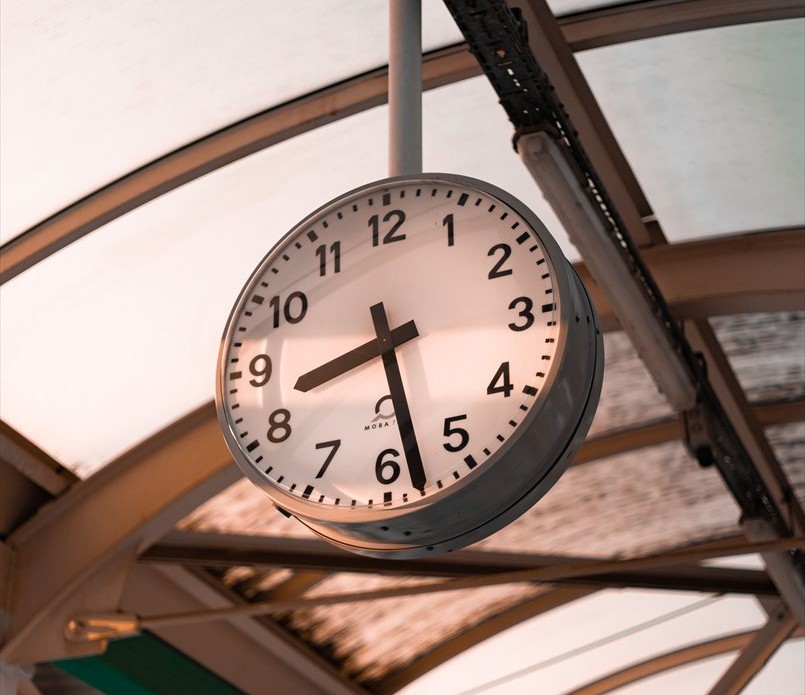
Tokyo is one of the largest cities in the world. About 14 million people live within the Tokyo metropolitan area. If we include the surrounding Kanto Plain, the population reaches about 40 million. Around 37 million people live within commuting distance of central Tokyo.
About 70% of Japan is covered by mountains and forests. The Kanto Plain is one of the country’s few large flat areas, so people naturally gathered here.
From the 17th to the 19th century, the Tokugawa shogunate ruled Japan from Edo, now called Tokyo. Edo was already a great city. Around one million people lived in Edo itself, and about four million lived in the surrounding area. At that time, it was the largest urban area in the world.
Why So Many People Commute
Today, many businesses still concentrate in central Tokyo. Most people commute by train from the suburbs. Tokyo has one of the world’s largest and most convenient railway networks.
Many people choose to live outside the city center because housing prices are very high. As a result, Tokyo has one of the busiest commuting systems in the world.
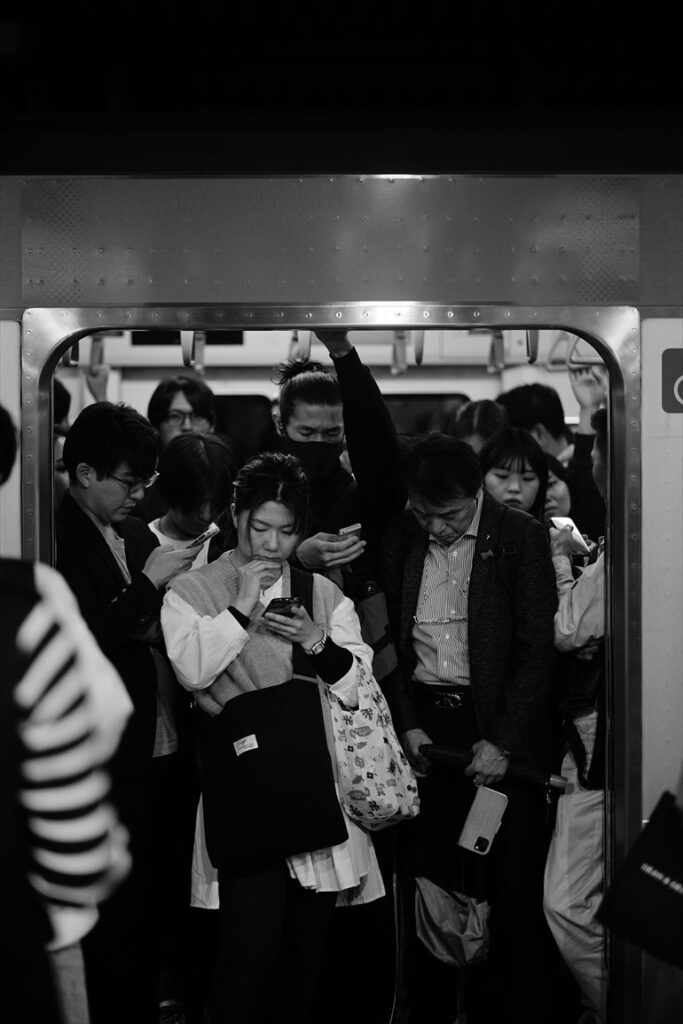
From the 1970s to the 1990s, many people called it “commuting hell.” Spending more than an hour on a packed train was common. Today, conditions have improved because railway networks have expanded and more people work from home after the COVID-19 pandemic. Even so, many trains are still very crowded.
The Best Place to Experience It
There is one place where I think you can experience this scene better than anywhere else. It is not inside a train. It is at the Konan Exit of Shinagawa Station.
Shinagawa is one of the major stations on the Yamanote Line. Many trains connect Tokyo with the western suburbs. Many companies are located around the Konan Exit. Every morning, thousands of people walk from the station toward their offices.
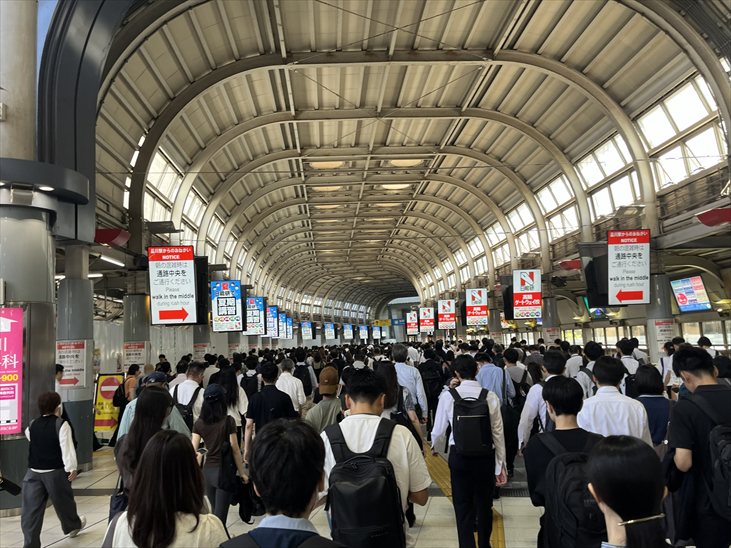
The area around the Konan Exit changed dramatically between the late 1990s and the late 2000s. Many large companies moved there. When I leave the JR Central Gate and turn right, I immediately see thousands of people walking across the pedestrian bridge.
The River of People
The bridge is about 250 meters long. Between around 8:15 and 9:00 a.m., almost the entire bridge fills with people. The flow never seems to stop. The expression “a river of people” describes the scene perfectly.
One thing may surprise visitors. People naturally separate into lanes. The center of the bridge carries people walking toward the Konan Exit, while both sides carry people walking back toward the station. In the evening, the flow simply reverses.
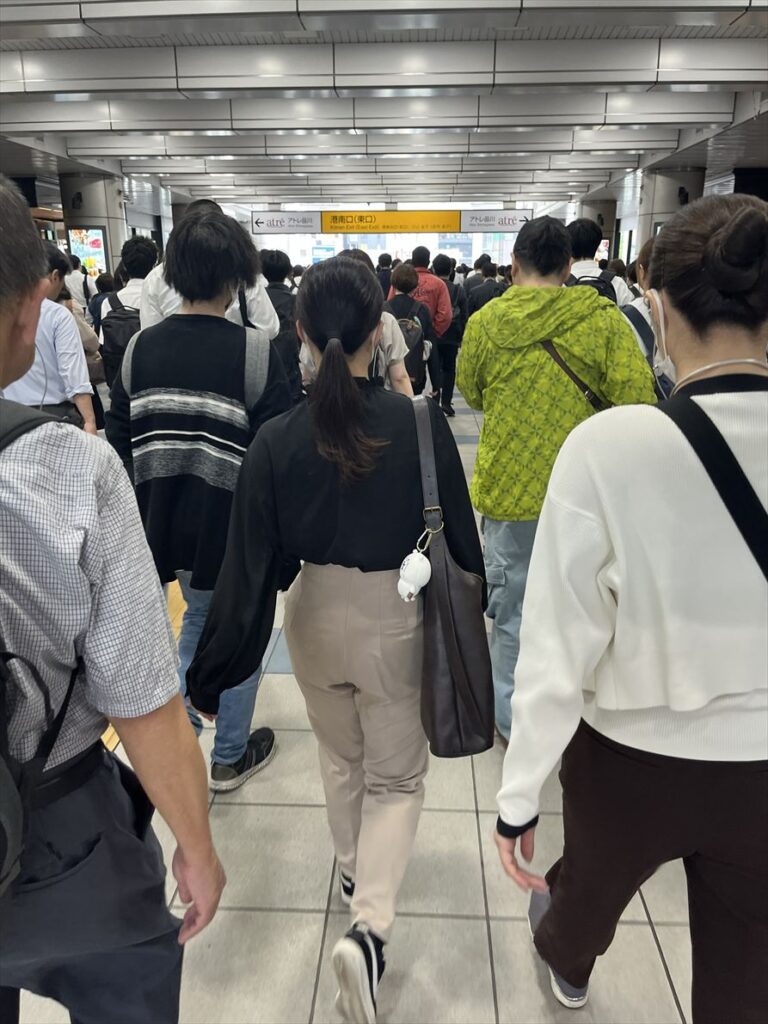
Nobody tells people where to walk. Everyone simply follows an unspoken rule. Sometimes I see overseas visitors walking against the flow because they do not know this custom.
A Symbol of Japanese Harmony
To me, this scene symbolizes Japanese culture. Everyone walks in the same direction. I see this as a symbol of how Japanese people adjust themselves to those around them.
Some people criticize this way of thinking. They say Japanese people suppress their individuality and simply follow the group. However, I do not think we can understand this scene without understanding Japanese history.
For centuries, Japan was an agricultural society built around rice farming. Rice was not only the country’s staple food but also a form of tax. Growing rice required the cooperation of everyone in the community. When I watch the people crossing this bridge, I see one of the core ideas of Japanese culture—harmony.
How My Thinking Changed
On a personal note, I did not understand this way of thinking when I was younger. If I had seen a crowd all walking in the same direction across the bridge, I would have wanted to walk straight against it. That was simply the kind of person I was.
Later, I came to understand the Japanese idea of harmony. I realized that keeping your own individuality and respecting the flow of other people are two different things. That changed the way I see this scene.
A Place That Makes Me Think
I experience this river of people almost every day. Whenever I walk across the bridge, it reminds me how unique and how deep Japanese culture really is.
If this article makes you curious, I hope you will visit Shinagawa Station yourself. You may discover something that I have missed.
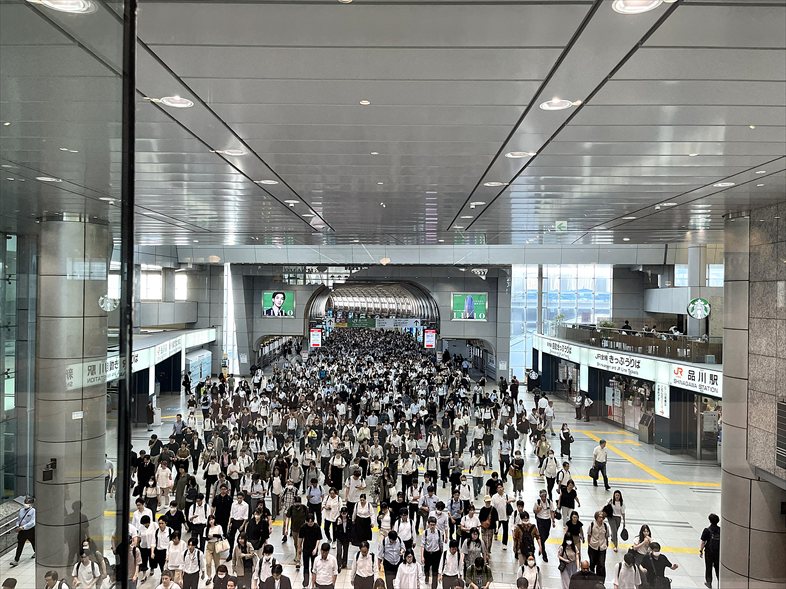
Finally, let me recommend my favorite viewing spot. Sit by the window on the second floor of Blue Bottle Coffee Shinagawa Cafe. From there, you can look down on the bridge and watch thousands of people quietly flowing through the city.
Recommended time: Weekdays, 8:20–8:40 a.m.
Location: The pedestrian bridge to the right after leaving the Central Gate of JR Shinagawa Station.
Basic Information
■ Name of Place : JR Shinagawa Station
■ Address : 2-chōme-18 Kōnan, Minato City, Tokyo
■ Homepage : https://tabelog.com/tokyo/A1314/A131403/13202262/ (Blue Bottle Coffee at Shinagawa-station)