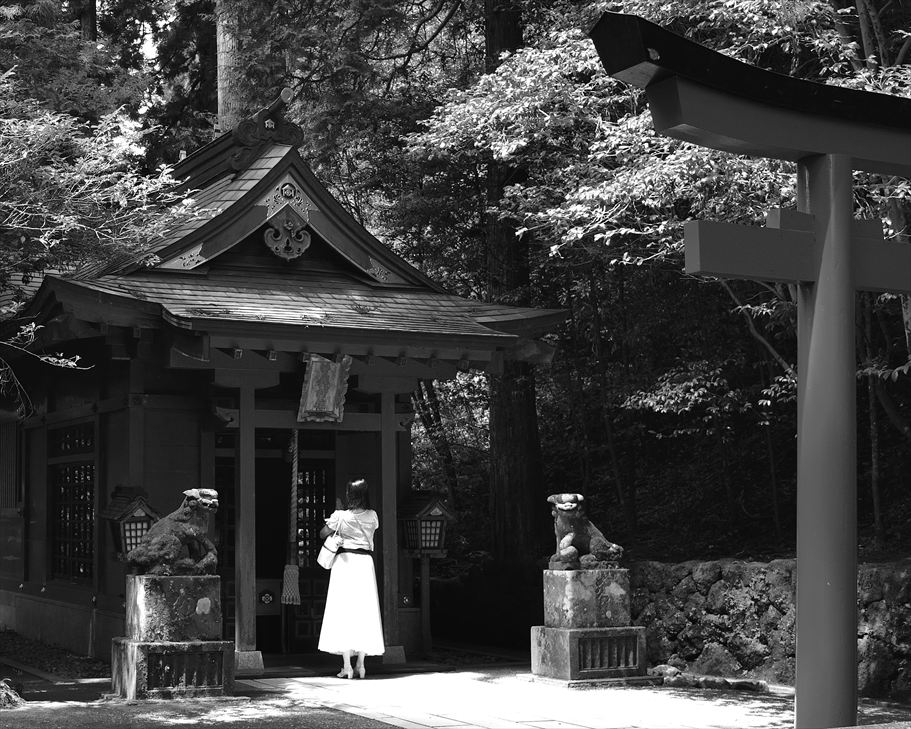
Introduction
When talking about Japanese culture, religion is impossible to ignore. This is because Japanese culture has been deeply shaped by two major traditions: Shinto and Buddhism. But this leads to a fundamental question: Are Shinto and Buddhism really “religions” in the way people usually think? In this article, I explore this question and what religion actually means in Japan.
Shinto (神道)
Shinto is an indigenous belief system of Japan. At its core is the concept of kami, often translated as “gods” or “spirits.” However, kami are not limited to a single form. They are believed to exist in mountains, rivers, trees, and even rocks. There are said to be “eight million kami,” a way of expressing their countless nature.
Kami can also be connected to mythology or historical figures. But in such cases, what is revered is not the person themselves, but the spirit or legacy they represent. At its heart, Shinto is less about doctrine and more about a way of relating to nature. Humans are not separate from nature, nor do they control it. They exist within it. This idea quietly shapes how many Japanese people see the world.
Buddhism (仏教)
Buddhism originated in India and was introduced to Japan in the 6th century (Introduction of Buddhism to Japan). It was founded by Gautama Buddha. Unlike many Western religions, Buddhism is not centered on a creator god. The Buddha was not a god, but a human being who sought to understand suffering and how to overcome it.
Buddhism begins with a simple but profound observation: life inevitably involves suffering. From there, it offers a path toward liberation from that suffering. Buddhist statues in temples are not merely objects of worship. They serve as visual representations of teachings—guides to a way of living.
Two Different Perspectives
Shinto and Buddhism coexist in Japan, but they look in different directions. Shinto emphasizes life, nature, and the present moment. It is closely tied to celebrations—births, growth, and seasonal festivals. Buddhism, on the other hand, turns attention to suffering, death, and what lies beyond.
This difference appears clearly in everyday life in Japan. Births and marriages are often celebrated in a Shinto style, while funerals are typically conducted according to Buddhist traditions. Rather than choosing one over the other, people naturally move between them depending on the occasion.
Syncretism
This coexistence is often described as syncretism. In Japan, it is common for people to visit both shrines and temples. They may celebrate Christmas, visit a shrine on New Year’s, and hold a Buddhist funeral. From an outside perspective, this may seem contradictory. But in Japan, it feels completely natural. One possible reason lies in Japan’s relationship with nature.
Japan is blessed with natural beauty, but also faces earthquakes, typhoons, and other forces beyond human control. Rather than resisting nature, people have learned to live with it. This attitude of acceptance and coexistence extends to ideas as well.
Instead of rejecting what comes from outside, Japan has a long history of absorbing and adapting it. Shinto and Buddhism did not compete—they blended
Is It Really Religion?
So we return to the question: Are Shinto and Buddhism truly “religions”? Many Japanese people do not strongly identify with a specific religion. Religion is rarely something they consciously think about in daily life. And yet, they visit shrines, honor ancestors, and observe rituals at key moments in life. It is less about “believing” and more about what is quietly practiced and taken for granted.
In this sense, religion in Japan differs significantly from traditions such as Christianity or Islam,
which place strong emphasis on belief and doctrine.
Conclusion
Shinto and Buddhism in Japan cannot be fully understood within the usual definition of religion. They are philosophy, culture, and daily practice at the same time.
And perhaps—
for many Japanese people, religion is not something to believe in, but something that has always been there.
Originally published on Mar. 24 2026
Last updated on Apr 9 2026