What is Obon?
Obon is one of the most important times in Japan, along with the New Year. People usually celebrate it from August 13 to 16, although some areas hold it in July. Obon comes from Buddhist traditions. During this period, people believe that the spirits of their ancestors return to their homes.
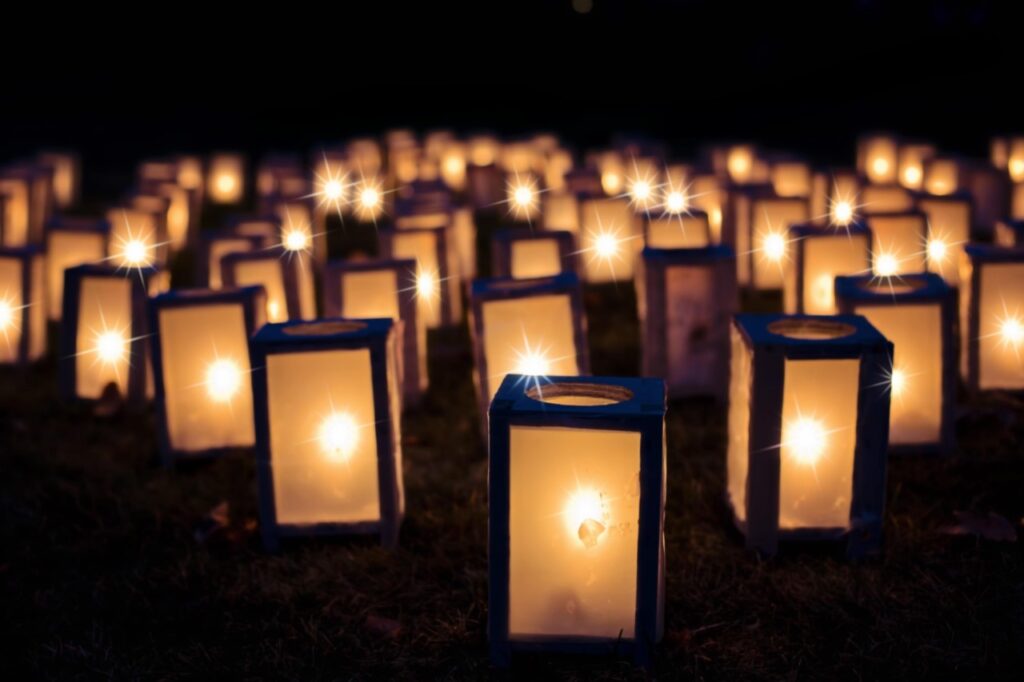
On August 13, people welcome the spirits with a fire called mukaebi (welcoming fire). On August 16, they send the spirits back with okuribi (farewell fire).
Family and Visiting Graves
During Obon, families gather and visit their ancestors’ graves. I have seen many families quietly cleaning graves and offering flowers. This custom does not come only from Buddhism. It also connects to older Japanese beliefs that respect ancestors. In Japan, Shinto and Buddhism often mix together. This idea is called religious fusion (syncretism), and Obon shows this clearly.
Bon Odori (Obon Dance)
Many towns hold Bon Odori festivals during Obon. People dance to welcome and honor the spirits of their ancestors. At the same time, these festivals bring local people together. I feel a warm and friendly atmosphere when I join or watch them. A stage called a yagura stands in the center. People form a circle and dance around it. Each area has its own dance style, so the movements are different from place to place.
Awa Odori
One famous Bon Odori is Awa Odori in Tokushima, on Shikoku Island. It is a very large festival, and many visitors come every year. I can see both locals and tourists enjoying the dance together. You can also find Awa Odori in other places, such as Koenji in Tokyo.
Okuribi and the End of Obon
On the last day of Obon, people hold farewell events for the spirits. One famous example is the Gozan Okuribi in Kyoto. People light large characters on the mountains around the city. This scene marks the end of Obon. When I watch these fires, I naturally think about my ancestors. The moment feels quiet and a little emotional.
Originally published on Apr 23 2026