What Is Washoku?
Washoku means Japanese food. It is easier to say “Japanese cuisine.” Popular dishes include sushi, tempura, sukiyaki, and yakiniku. In 2013, UNESCO added Washoku to the list of Intangible Cultural Heritage. It recognized Washoku as “traditional dietary cultures of the Japanese.”
Why UNESCO Recognized Washoku
UNESCO highlighted four key points.
First, people use fresh, seasonal ingredients from nature.
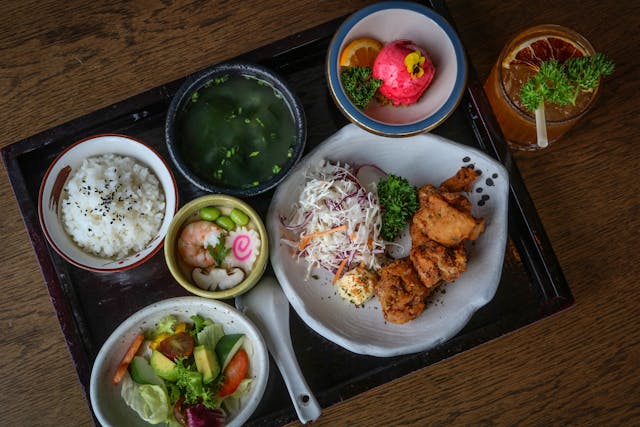
Second, meals have good balance, often in the form of “one soup and three dishes.”
Third, people value seasonality in food and presentation.
Fourth, food connects closely with annual events such as the New Year.
A Fish-Centered Diet in the Past
In the past, people in Japan usually avoided meat. In particular, they tended to avoid four-legged animals until the end of the Edo period. Because of this, fish became the main source of protein. Japan is surrounded by the sea, so fish was easy to get. People also ate rice and soybeans, and they got protein from these foods as well.
The Basic Style: One Soup and Three Dishes
A typical Washoku meal follows “one soup and three dishes.” The soup is usually miso soup. The three dishes are side dishes. People eat several small dishes instead of one large plate. This helps keep a good balance of nutrition. Rice is not counted in this set because it is the main staple food.
Dashi: The Foundation of Flavor
Dashi is essential in Japanese cooking. It is a broth made from ingredients like dried bonito flakes, kelp, and shiitake mushrooms. Chefs use dashi as the base of flavor. Bonito flakes are especially common. People boil them in water to make the broth. Many dishes use dashi, such as udon and soba. Even ramen, which people widely eat in Japan, often uses it. I think dashi is a key part of everyday meals.
Fermented Foods and My Personal Habit
Fermented foods are also important. Miso and soy sauce are the best examples. Miso comes from fermented soybeans and salt. Soy sauce comes from soybeans, wheat, and salt. Personally, I cannot eat without soy sauce. When food tastes a little light, I always add soy sauce. I do it almost automatically. It is that important in my daily life.
Beauty as Part of the Meal
Washoku values visual beauty. People enjoy food with their eyes as well as their taste. Chefs care about colors, arrangement, and seasonal feeling. Because of this, Washoku often feels like art.
Japan’s High-Level Food Culture
Japan has one of the highest numbers of starred restaurants in the Michelin Guide. This shows the high level of Japanese food culture. However, I think you do not need to go to Michelin-star restaurants. Many excellent local restaurants exist everywhere. Japan has rich nature and great ingredients, and this supports the overall quality of food.
Originally published on Aor 28 2019