What Is a Temple?
In Buddhism, people visit temples to pray. Originally, temples serve as places where monks train. Monks train because of a fundamental idea in Buddhism: life involves suffering. People try to understand, overcome, and eventually free themselves from this suffering through practice.
Meaning of Buddhist Statues
Many temples display Buddhist statues. These are not simply decorations. They represent ideal beings who have attained enlightenment and show people how to live. There are many types, such as the Great Buddha, Shaka (Gautama Buddha), Yakushi Nyorai, and Kannon Bosatsu. Artists create each statue individually, so people often appreciate them as works of art. Many visitors feel calm when they look at their peaceful expressions.
Main Buildings of a Temple
Temples usually include several important buildings, such as the main hall, the gate, and a pagoda. The main hall enshrines Buddhist statues, and people pray in front of it. There is no strict rule for praying, but people often put their hands together in front of their chest, a gesture called gassho.
Incense and Purification
In front of the main hall, you can usually find an incense burner. People light incense, and smoke rises from it. Many believe that this smoke purifies the body and mind. Visitors often direct the smoke toward their bodies, especially toward areas where they feel discomfort, as they believe it may help with healing.
Temple Gate and Pagoda
The temple gate marks the entrance and often has a large, two-story structure with doors. This differs from a Shinto torii gate, which does not have doors. The pagoda expresses a Buddhist view of the universe and usually has three or five stories. It originally developed from structures that enshrined the relics of Gautama Buddha, but in Japan, people often build it as a symbolic structure.
Temples in Japan
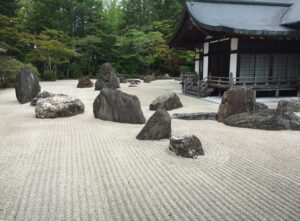
Japan has about 70,000 temples. Famous examples include Senso-ji in Tokyo and Kinkaku-ji and Ginkaku-ji in Kyoto. Many temples also feature a bell tower and a Japanese garden, and each temple offers its own unique atmosphere.
Zen and Meditation
Finally, monks practice zazen (seated meditation) as part of Zen Buddhism. This practice came to Japan in the 12th to 13th centuries and developed in its own way. Practitioners sit with their legs crossed, keep their backs straight, and focus on their breathing. Through this practice, they clear their minds, calm themselves, and reflect on who they are. Famous Zen temples include Kencho-ji and Engaku-ji in Kamakura, where visitors can sometimes join meditation sessions.
Originally published on Apr. 10, 2026
Last updated on Apr. 11 2026